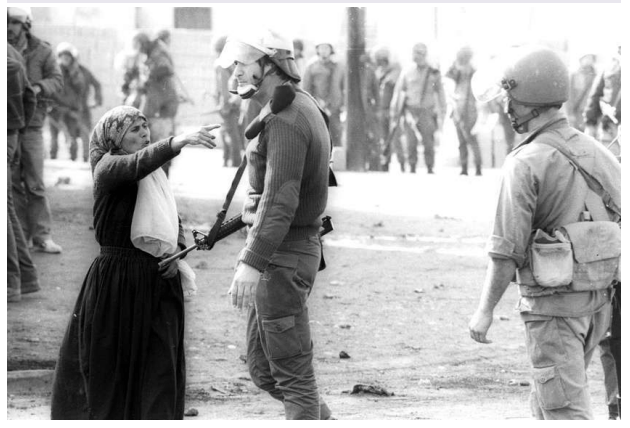
In late 1987, unrest erupted in the West Bank and Gaza Strip as frustrated Palestinians rebelled against two decades of Israeli occupation. Although Israel deployed 80,000 troops to the territories, crushing the uprising, known as the Intifada, proved costly. By 1991, Israel and the Palestine Liberation Organisation (PLO) agreed to negotiate peace. For Palestinian women, this period was not just historically significant, but also transformative in ways that redefined their roles in both the nationalist struggle and the fabric of Palestinian society. Their experiences during the uprising offer valuable insight into the ways gender and nationalism intersect, influencing both political activism and social frameworks. This essay explores these intersections, drawing from academic research and historical accounts to detail how Palestinian women contributed to the uprising while navigating the constraints of patriarchal norms. The Palestinian struggle for self-determination is often characterised by its collective mobilisation against Israeli occupation. Still, a deeper examination of gender dynamics reveals underrepresented narratives, particularly the roles of women. The First Intifada was an event that heavily relied on grassroots activism, with significant participation from women across different sectors of Palestinian society. From organising protests to sustaining community resilience through caregiving and education, women took on critical tasks essential to the uprising’s operations and success. Their involvement also led to a reimagining of their roles in public and private life, creating a complex interplay between liberation and traditional societal expectations.
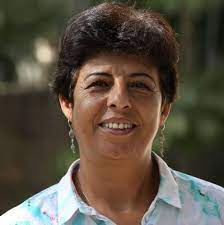
Prominent works such as Rashid Khalidi’s Palestinian Identity (1997), Naila Ayesh’s memoirs (1988), and Islah Jad’s recollections (1990), provide essential frameworks for understanding the broader dynamics of Palestinian nationalism and the contributions of women. Feminist scholars, including Lila Abu-Lughod (1998) and Anne Marie Oliver (1990), enrich the discussion by highlighting how gender influenced the strategy and symbolism of nationalist movements. Rosemary Sayigh (1994) and Amira Hass’s critical reflections (1996) further dissect the intersectionality of socio-political dynamics and gender. These academic and historical perspectives provide a strong basis for uncovering Palestinian women’s often-overlooked sacrifices and contributions. By focusing on this intersection of gender and nationalism, this essay underscores how women’s agency stood out during a critical confluence in Palestinian national history. Their contributions expanded beyond traditional roles, though their efforts often remained framed within patriarchal structures that limited broader gender equity. Analysing their roles illuminates a nuanced picture of resistance and emancipation, offering valuable lessons for understanding gendered dimensions in political struggles worldwide.
Context of the First Intifada
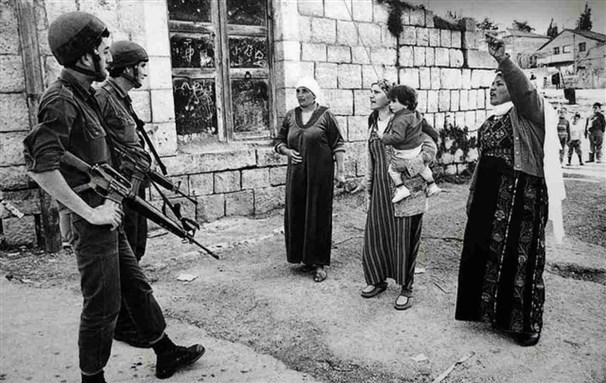
The First Intifada emerged against a backdrop of prolonged Israeli occupation in the West Bank and Gaza, economic disparity, and mounting frustration over the political processes. While tensions had been building since the Six-Day War in 1967 and subsequent occupation, the uprising was prompted by a series of events, including the killing of four Palestinian workers at a checkpoint in Gaza in December 1987 (Khalidi, 1997). A mass grassroots movement followed, characterised by protests, boycotts, and civil disobedience (tactics designed to challenge the occupation through nonviolent resistance while demanding greater international recognition of Palestinian rights). Women were central to this grassroots mobilisation, navigating a complicated social and political landscape. Their involvement in the Intifada reflected an intersectionality of struggles: a fight against occupation, a push for recognition within the nationalist movement, and enduring resistance to broader gender inequality. As Naila Ayesh (1988), a prominent activist during the Intifada, explains in her memoirs, the eruption of resistance created new spaces for women to contribute actively, often stepping outside traditional domestic boundaries. Grassroots women’s committees proliferated, serving as vehicles for political organisation and community resilience.
Internationally, the Intifada showcased the human dimension of the Palestinian struggle, propelling individuals like these women into broader narratives. However, a deeper analysis reveals less visible struggles, such as how societal norms and expectations confined even their remarkable contributions within patriarchal boundaries (Abu-Lughod, 1998). Examining these transformations is essential to understanding the dynamics of the uprising and its broader implications for Palestinian society.
The role of women in the Intifada
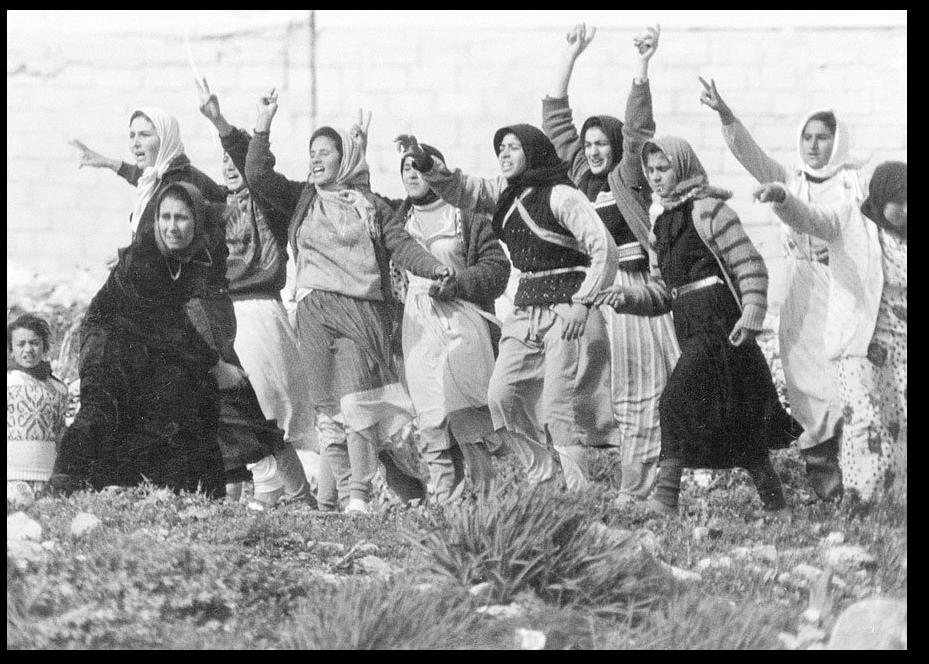
The roles that Palestinian women played were as diverse as they were significant. Traditionally consigned to secondary roles in political and community life, women transitioned into more prominent positions as the uprising progressed. From organising demonstrations to maintaining the economic resilience of their communities, their contributions went far beyond support tasks. They took central roles in the struggle for national liberation. For instance, women produced and distributed political literature, boycotted Israeli goods and ran underground schools (Sayigh, 1994). Women’s grassroots committees became a focal point for activism during the Intifada. These committees mobilised efforts to sustain community welfare amid violence and disruption. They organised clandestine networks to provide medical aid, revive traditional agricultural practices, and create self-sufficient systems that evaded dependence on Israeli markets (Jad, 1990). By reclaiming agricultural spaces and promoting local economies, women were critical in the daily resistance to occupation. This period also saw increasing political awareness among women, many of whom were compelled to engage in roles traditionally dominated by men due to circumstances in which male members of households were detained or killed. Women began assuming leadership positions, often operating secretly to continue the work of imprisoned activists. Feminist scholars like Anne Marie Oliver have argued that these roles revealed women’s potential to impact nationalist movements in ways that challenged existing gender norms, even as their contributions were often framed within traditional maternal or caregiving narratives (Oliver, 1990). The symbolism of women in the Intifada also added dimension to their activism. As Amira Hass (1999) underscores, women were widely regarded as symbols of endurance and resilience, their presence in the protests challenging both the occupation and the confines of patriarchal expectations. Whether marching in demonstrations or holding up photographs of imprisoned sons and husbands, women’s visibility in the streets became a statement of defiance.
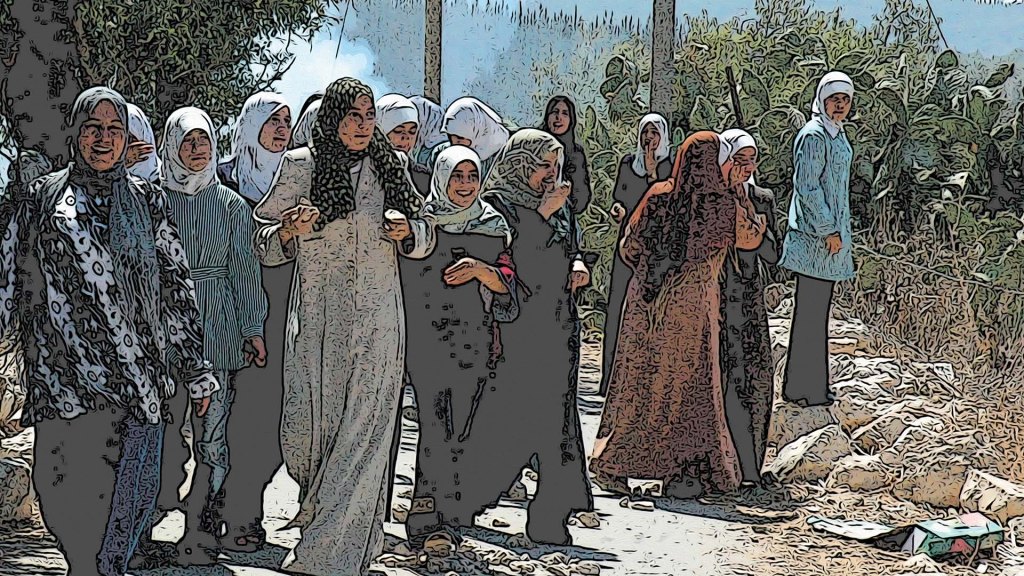
However, their involvement came with considerable challenges. Patriarchal norms did not simply dissolve in the wake this revolution. Women often had to fight for their inclusion in decision-making processes within nationalist groups, where their agency was frequently downplayed. While the uprising created openings for women’s engagement, it also reinforced existing hierarchies, framing their contributions as supplementary rather than central. The balance of empowerment and marginalisation that shaped women’s experiences during the Intifada holds valuable lessons for understanding gendered dimensions in political struggles. Their contributions illuminated how the intersection of gender and nationalism can expand and constrain agency, forcing society to reckon with its rooted imbalances. By highlighting these nuances, this essay seeks to deepen our comprehension of the complex interplay between resistance and gender equity in contexts of occupation and national liberation. References to the sacrifices and contributions of Palestinian women remain integral to the broader narrative of the First Intifada, just as their stories provide critical lessons for movements worldwide.
Gendered interpretations of nationalism
The nationalist movement during the First Intifada presented a dual challenge for Palestinian women: the fight against occupation and the struggle for gender equity within their own society. Nationalism, as a political and social construct, has historically been shaped and expressed through gendered frameworks, and the Intifada was no exception. Palestinian women found themselves navigating these gendered narratives as they engaged in nationalist activism. On the one hand, women contributed significantly to the nationalist cause by participating in protests, coordinating humanitarian efforts, and organising community networks (Kawar, 1996). Their roles were often celebrated in nationalist rhetoric, emphasising women as mothers of the nation—symbolic guardians of cultural identity and values. This constructed image highlighted women as generous contributors to the collective struggle, embodying ideals of sacrifice and resilience (Yuval-Davis, 1997). This framing, however, often confined women to traditional roles, limiting broader societal acknowledgement of their leadership and agency.
On the other hand, women’s involvement exposed the contradictions within nationalist movements. While their work was essential to the survival and progression of the Intifada, they were frequently excluded from formal leadership roles and decision-making processes. Pappé (1999) asserts that women’s contributions were often considered under the broader nationalist agenda, which prioritised collective liberation over individual or gender-specific rights. This dynamic underscored the tension between the immediate goals of national liberation and the longer-term vision of gender equality. Furthermore, women activists faced continuous negotiations over their identities. While participating in nationalist activities, they challenged patriarchal norms by stepping into public spaces traditionally dominated by men. However, their activism was often framed in ways that reinforced their roles as protectors of the nation rather than as independent political actors (Kuttab, 2008). These gendered interpretations reflected broader struggles within the nationalist movement to reconcile traditional perceptions of gender with the evolving roles of women during periods of resistance.
Despite these challenges, the First Intifada demonstrated the transformative potential of women’s activism. By participating in the nationalist movement, women advanced the Palestinian cause and shed the light on women’s rights and gender issues. Sadiqi and Ennaji (2011) argue that this period marked a turning point, as it planted the seeds for a more inclusive discourse on nationalism and gender within Palestinian society. Yet, the legacies of this activism show that the struggle for meaningful equality remains unfinished as gendered interpretations of nationalism continue to shape contemporary movements.
Dealing with patriarchy and resistance
For Palestinian women, the uprising was not just resistance against Israeli occupation but also an opportunity to challenge the patriarchal norms of their society. While the Intifada gave women greater access to public and political life, their participation was often shaped by established gender biases. Activists had to reconcile their roles in resisting the external oppressor with internal pressures to adhere to societal rules. The grassroots women’s committees exemplified this dual challenge. On the one hand, these networks provided opportunities for empowerment, where women-led essential initiatives such as food distribution, underground education, and economic self-sufficiency programs (Jad, 1990).
On the other hand, framing their contributions often emphasised traditional gendered roles, presenting them as community caretakers rather than independent political agents. As Peteet (1991) notes, women’s activism frequently operated within acceptable cultural frameworks to maintain social legitimacy. This balancing act extended to their visibility in resistance activities. Women publicly participated in protests, bearing symbols of Palestinian resilience. Yet, their leadership remained largely informal and constrained by patriarchal leadership structures. Although they proved indispensable to the uprising, they were rarely included in formal decision-making processes. Sharoni and Tétreault (1996) suggest that this exclusion reflects broader trends in nationalist movements, where women’s rights are often sidelined in favour of uniting against the common external enemy. Despite these limitations, the First Intifada marked a significant evolution in gender dynamics within Palestinian activism.
Broader implications and legacies
The legacy of women’s involvement in the First Intifada extends well beyond its immediate political and social context, shaping both the trajectory of Palestinian nationalism and the broader fight for gender equity. Women’s contributions as activists, organisers, and symbolically influential figures demonstrated their capacity to sustain resistance and challenge and redefine traditional gender roles within Palestinian society. Their dual fight against occupation and patriarchal norms had enduring repercussions. Women stepped into leadership positions, organised grassroots movements, and participated in political life in ways that disrupted traditional expectations. This activism paved the way for deeper discussions around gender equity in Palestinian society. Nevertheless, as Pappé (1999) highlights, these gains were often seen as secondary to the primary nationalist goal of sovereignty. This tension between nationalism and gender equity continues to shape feminist and nationalist discourses within Palestinian activism.
Furthermore, the Intifada shed light on the contradictions within liberation movements themselves. While women’s contributions were essential for the resistance, they were frequently sidelined in formal leadership and decision-making processes. Sharoni and Tétreault (1996) point out that the emphasis on unity against external threats often eclipsed the pursuit of internal social reforms, leaving many issues of gender inequality unsolved. Even so, the visibility of women’s activism during the Intifada inspired future generations and movements. Sadiqi and Ennaji (2011) asserts that their efforts established a critical precedent for integrating gender perspectives into Palestinian resistance efforts. Their dual struggle underscores the complexity of their roles within the liberation movement, highlighting the intersection of resistance, gender, and societal transformation. In retrospect, the First Intifada was a watershed moment for Palestinian national liberation and a turning point for women’s rights in the region.
Post-Intifada reflections
The period following the First Intifada brought both progress and stagnation for Palestinian women. While their contributions during the uprising had set a significant precedent, the post-Intifada years exposed both the gains achieved and the persistent structural obstacles faced by women in Palestinian society. One notable reflection is the institutional recognition of women’s activism during the Intifada. Women’s committees and organisations that had been instrumental in resistance began to develop into more conventional entities to address broader social and political issues, including gender parity. For instance, some grassroots initiatives became NGOs focusing on women’s rights, political participation, and economic empowerment (Jad, 2004). This formalisation allowed women to stay visible in public life, although sometimes at the cost of grassroots pressure. However, while some areas saw increased female participation, such as education and employment, others resisted to change. For example, women’s representation in formal political structures stayed limited. Hasso (2005) argues that post-conflict environments often prioritise rebuilding national institutions over addressing gender disparities, a reality that was apparent in Palestine during this period. Similarly, the dual struggle appeared in new forms. Patriarchal norms that were temporarily disrupted by the urgency of resistance efforts reinstated themselves once the conflict was over. Women who led the resistance found themselves relegated once again to traditional domestic roles.
Another critical aspect of post-Intifada reflections relates to the intergenerational effect of women’s activism. The power of female resistance figures provided younger generations with role models for activism and leadership. As Sadiqi and Ennaji (2011) observe, the legacy of the Intifada inspired new waves of feminist movements that integrate gender equality as broader national goals. However, challenges remain. The ongoing Israeli-Palestinian conflict continues to expose gender issues within Palestinian society. Women continue to face unique hardships, including economic insecurity and limited access to resources.
Conclusion
While marking a significant chapter in Palestinian resistance, the First Intifada also became a pivotal moment for women’s activism. It emphasised their dual struggle against occupation and patriarchal norms, revealing their strength and leadership during national crises. Women’s participation, often downplayed within traditional nationalist narratives, challenged established gender norms and laid a foundation for future efforts toward gender equality. Their involvement in grassroots initiatives, economic resilience, and public protest showcased their capacity to overcome societal restrictions. Although full gender equality still unfulfilled, the First Intifada ignited new conversations about the intersection of gender and national liberation. The post-Intifada era echoed the accomplishments and obstacles still to be overcome, emphasising the tension between achieving nationalist goals and advancing gender parity. As the Palestinian struggle continues, the legacy of women’s activism during the First Intifada is a powerful reminder of the necessity for an inclusive vision of justice that fully recognises women’s indispensable role. Ultimately, the experiences of the First Intifada underscore that the liberation of a nation is fundamentally tied to the liberation of its people, regardless of gender. Palestinian women’s enduring determination and sacrifices reaffirm that achieving national and gender equality is a collective quest essential for creating a fairer future.
- References
Abu-Lughod, L. (1998). Remaking Women: Feminism and Modernity in the Middle East. Princeton University Press.
Available at: https://ereader.perlego.com/1/book/734014/1
(Accessed: 3 January 2025).
Ayesh, N. (1988). Memoirs of a Palestinian Woman During the First Intifada.
Available at
https://www.middleeasteye.net/features/my-story-one-many-palestinian-women-behind-first-intifada
(Accessed: 15 December 2024)
Hass, A. (1999). Drinking the Sea at Gaza: Days and Nights in a Land Under Siege. United States: Henry Holt and Company.
Available at: https://icmglt.org/icmlibrary/drinking-the-sea-at-gaza-days-and-nights-in-a-land-under-siege/
(Accessed: 15 December 2024).
Jad, I. (1990). Women and Grassroots Organizing: Reflections on the Palestinian Experience, Gender & Development, 3(3), pp. 35–42.
Jad, I. (2004). The NGOization of Arab Women’s Movements. Institute for Women’s Studies, Birzeit University.
Khalidi, R. (1997). Palestinian Identity: The Construction of Modern National Consciousness. Columbia University Press.
Kawar, A. (1996). Daughters of Palestine: Leading Women of the Palestinian National Movement. SUNY Press.
Kuttab, E. (2008). Palestinian Women’s Resistance: The Role of Women in the Intifada, Journal of Middle East Women’s Studies, 4(3), pp. 1–26.
Oliver, A. M. (1990). The Symbolism of Palestinian Women in Nationalist Movements, Signs: Journal of Women in Culture and Society, 15(4), pp. 761–789.
Pappé, I. (1999). The Israel/Palestine Question: A Reader. Routledge.
Peteet, J. (1991). Gender in Crisis: Women and the Palestinian Resistance Movement. Columbia University Press.
Sadiqi, F. and Ennaji, M. (2011) Women in the Middle East and North Africa : agents of change. Milton Park, Abingdon, Oxon: Routledge.
Available at:
https://api.pageplace.de/preview/DT0400.9781136970382_A24375633/preview-9781136970382_A24375633.pdf
(Accessed: 16 December 2024)
Sayigh, R. (1994). Many Enemies: The Palestinian Experience in Lebanon. Zed Books.
Sharoni, S. and Tétreault, M.A., 1996. Gender and the Israeli-Palestinian conflict: the politics of women’s resistance. The Middle East Journal, 50(2), pp.290-293.
Yuval-Davis, N. (1997). Gender and Nation. Sage Publications.
Available at: https://ebookcentral.proquest.com/lib/uel/detail.action?docID=1474792
(Accessed: 3 January 2025).
 The world affairs review
Leave a comment